

The forex market doesn’t reward guesswork. It punishes it. Yet every year, thousands of new traders enter foreign exchange with the belief that high leverage and a few chart patterns are all they need to generate consistent income. The reality is different. The global forex market averaged $9.5 trillion in daily turnover in April 2025, making it the largest and most liquid financial market on earth. That liquidity creates opportunity, but it also creates risk. This guide cuts through the noise and gives you the practical frameworks, proven forex trading strategies, and risk management principles that actually matter in 2026.
Table of Contents
Key Takeaways
| Point | Details |
|---|---|
| Forex scale is massive | The market processes trillions daily, offering liquidity but also amplified risk for underprepared traders. |
| Strategy beats complexity | Price action and market structure approaches consistently outperform indicator-heavy systems for most traders. |
| Risk management is non-negotiable | Risking 0.5% to 2% per trade and using stop-loss orders protects capital through inevitable losing streaks. |
| Regulation shapes your options | Leverage caps differ by jurisdiction; using regulated brokers is the safest path for retail traders. |
| Automation removes emotion | Turning tested strategies into automated bots eliminates hesitation and enforces execution discipline. |
Forex market fundamentals you need to understand
The forex market has no central exchange. It operates across a global network of banks, institutions, and retail brokers running 24 hours a day, five days a week. That decentralized structure is what gives it lower fees and better cost predictability compared to many other financial markets, but it also means pricing and liquidity can vary depending on where and when you trade.
Major currency pairs and why they matter
Currency pairs fall into three categories: majors, minors, and exotics. Majors always involve the US dollar paired with another major currency. The most traded pairs include EUR/USD, USD/JPY, GBP/USD, and USD/CHF. These pairs offer the tightest spreads and deepest liquidity, making them the logical starting point for any new trader.
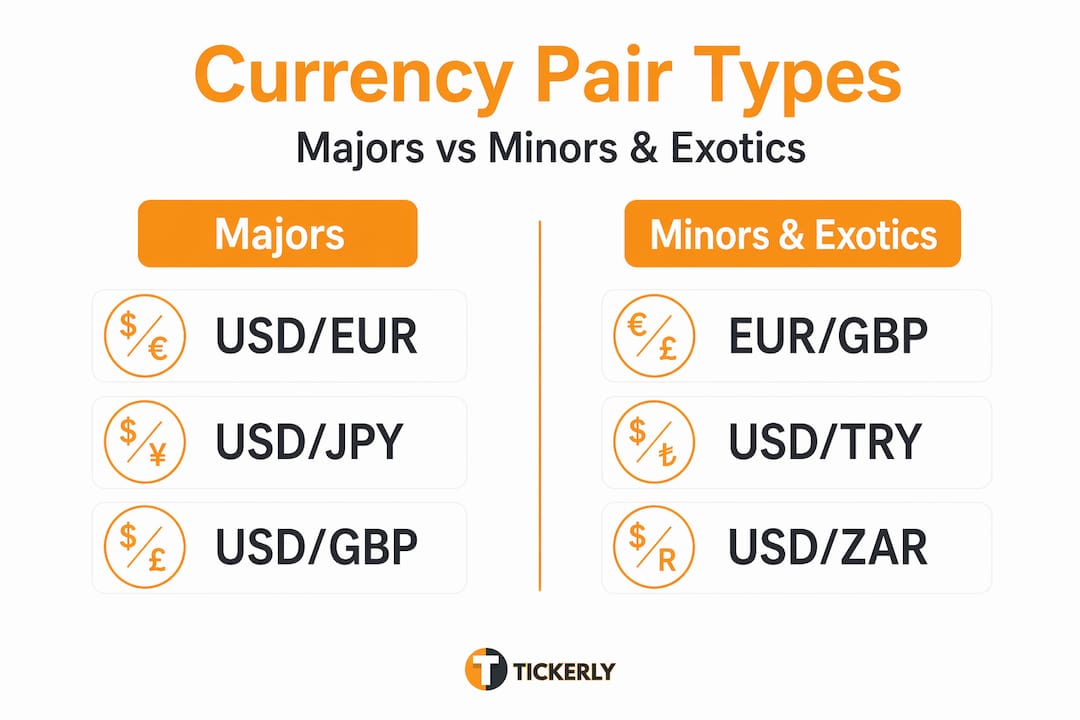
Minors and exotics carry wider spreads and thinner liquidity. That means your entry and exit costs are higher, and slippage becomes a real factor. For traders focused on spread transparency and execution quality, sticking to majors is the practical choice until you have a tested process.
Trading sessions and their characteristics
The forex market operates across four major sessions:
-
Sydney session (10 PM to 7 AM GMT): Lower volatility, often used for range trading on pairs involving the Australian dollar.
-
Tokyo session (midnight to 9 AM GMT): Moderate liquidity, particularly active for JPY pairs.
-
London session (8 AM to 5 PM GMT): The most liquid session. The UK market alone accounted for $4,745 billion in daily turnover in April 2025.
-
New York session (1 PM to 10 PM GMT): High volatility, especially during the overlap with London between 1 PM and 5 PM GMT.
Core terms every trader should know
Pip: The smallest standard price movement in a currency pair, typically the fourth decimal place for most pairs. Spread: The difference between the bid and ask price. This is your transaction cost on every trade. Leverage: Borrowed capital from your broker that amplifies both gains and losses. Margin: The deposit required to open a leveraged position. Misunderstanding these four terms is responsible for more early account blowups than almost any other factor.
Effective forex trading strategies for beginners and intermediates
Most traders fail not because their strategy is wrong, but because their execution is inconsistent. Price action and market structure strategies consistently outperform complex indicator-heavy approaches, especially for traders still building their skill base. Here is a practical breakdown of strategies worth learning in order of complexity:
-
Trend following. Identify the direction of the dominant trend using a higher timeframe (daily or 4-hour chart). Enter on pullbacks within that trend using moving averages or clean price structure. Exit at the next significant resistance or support zone. This is the most reliable method for capturing large moves with defined risk.
-
Support and resistance trading. Mark key price levels where the market has reversed or consolidated before. Trade bounces from those levels with tight stops just beyond the zone. This approach works across all timeframes and pairs.
-
Breakout trading. Wait for price to consolidate in a defined range, then enter when it breaks out with volume and momentum. The key is avoiding false breakouts by waiting for a retest of the broken level before entering.
-
Swing trading. Hold positions for two to five days, capturing one swing within a larger trend. Swing trading suits traders who cannot monitor charts during market hours. It also reduces the cost drag from spreads that scalpers face on high-frequency entries.
-
Scalping. Enter and exit trades within minutes, targeting small pip movements repeated across many setups. Scalping demands fast execution, tight spreads, and serious discipline. It is not the best starting point for beginners.
Pro Tip: Before adding any indicator to your chart, ask yourself whether you could make the same trading decision using only price and volume. If the answer is yes, the indicator is noise. Start with pure market structure principles and add tools only when they solve a specific problem.
The importance of trading discipline cannot be overstated. Experienced traders follow their plan as a contract, not a suggestion. If your rules say “do not trade during high-impact news events,” that means every news event, every time, without exception.
Risk management and the 2026 regulatory environment
Protecting your capital is not a secondary concern. It is the primary goal of every session. Professional risk management suggests risking 0.5% to 2% of your capital per trade and testing your plan over 60 to 90 days on a demo account before trading real money. That is not cautious. That is the baseline for sustainable trading.
Leverage limits by jurisdiction in 2026
Leverage is where many traders get into serious trouble. Current regulations set clear caps:
| Jurisdiction | Major pairs | Minor/exotic pairs | Key protection |
|---|---|---|---|
| United States (CFTC/NFA) | 50:1 | 20:1 | FIFO rule applies; offshore brokers not covered |
| European Union (ESMA) | 30:1 | Variable | 50% margin close-out rule; negative balance protection |
| United Kingdom (FCA) | 30:1 | Variable | Mandatory negative balance protection |
These retail forex leverage caps exist for good reason. A 50:1 leverage ratio means a 2% move against your position wipes your margin entirely. At 30:1, that threshold is 3.3%. Neither is forgiving if you are trading without stops.
Pro Tip: If a broker advertises 500:1 leverage and is based offshore, that is a red flag, not a feature. US traders must use CFTC/NFA regulated brokers for legal protection. The extra leverage an unregulated broker offers is rarely worth the counterparty risk.
Core risk management techniques worth implementing immediately:
-
Position sizing based on ATR: Use the Average True Range as a volatility measure to scale your position size. When markets are volatile, smaller positions. When markets are quiet, you can size up slightly.
-
Hard stop-loss orders: Every trade gets a stop. No exceptions. Place it before you enter, not after.
-
Daily loss limits: Cap your maximum daily drawdown at 3% to 5% of account equity. If you hit it, stop trading for the day.
-
Margin monitoring: Keep your free margin well above your broker’s close-out threshold. Running lean on margin leaves no room for normal price fluctuation.
Common pitfalls that derail forex traders
Over 70% of beginner traders lose money in their first year due to poor process and overtrading. That statistic is not there to discourage you. It is there to show you that the mistakes are predictable and therefore avoidable. Here are the most common failure patterns:
-
Over-leveraging without a process. New traders see high leverage as opportunity. Professionals see it as a liability without a tested plan behind it. Using maximum leverage before you have a proven edge accelerates losses, not gains.
-
Emotional trading after losses. Taking a larger position to “get back” losses from the previous trade is revenge trading. It is the fastest way to turn a bad day into a blown account.
-
Ignoring session liquidity. Trading EUR/USD during the Sydney session means lower liquidity, wider spreads, and erratic price movement. Match your strategy to the correct session.
-
Skipping demo trading. A 60 to 90 day demo period is not optional. It establishes your win rate, average risk/reward, and expectancy before real capital is at risk.
-
Chasing carry trades without an exit plan. The carry trade strategy, which borrows low-yielding currencies to invest in high-yielding ones, looks attractive on paper. But the 2024 yen carry unwind caused 12 to 15% drawdowns in days, wiping out months of interest gains for traders who had no volatility exit plan.
-
No written trading plan. Trading without a written plan is not flexibility. It is improvisation with financial consequences. Your plan should cover entry criteria, exit criteria, position sizing, and daily loss limits at a minimum.
The traders who survive long enough to become consistently profitable share one trait: they treat every loss as data, not failure. They review their trades systematically using automated trading milestones and refine their process without abandoning their framework.
My perspective on what actually builds forex longevity
I’ve watched traders enter the forex market with strong technical knowledge and still fail within six months. The reason is almost never the strategy. It’s the mindset. Most people treat forex like a lottery ticket with charts attached. The moment a trade goes against them, they override their stops or double down. That’s not trading. That’s gambling with extra steps.
What I’ve found works is treating your trading operation like a small business. A business has operating rules, acceptable loss tolerances, and a review process. It does not make emotional decisions based on a single bad quarter. In my experience, the traders who apply that business-level discipline to their forex practice are the ones still trading three years later.
The carry trade lesson from 2024 is one I keep coming back to. The yen carry unwind wasn’t a surprise to anyone watching volatility signals. But the traders who got crushed were the ones who had no exit protocol because they had never defined one. Carry trades are profitable in stable regimes. The problem is that stable regimes end abruptly. You need a plan for that ending before you put the trade on.
My recommendation: if you can’t articulate your exit criteria before entering a trade, you are not ready to enter it.
— Jay
Automate your forex strategy with Tickerly
If you’ve built a forex strategy that works on paper and in demo trading, the next challenge is executing it without emotional interference. That’s exactly where Tickerly comes in. Tickerly turns your TradingView strategies into a fully automated trading bot, removing hesitation from the equation entirely.
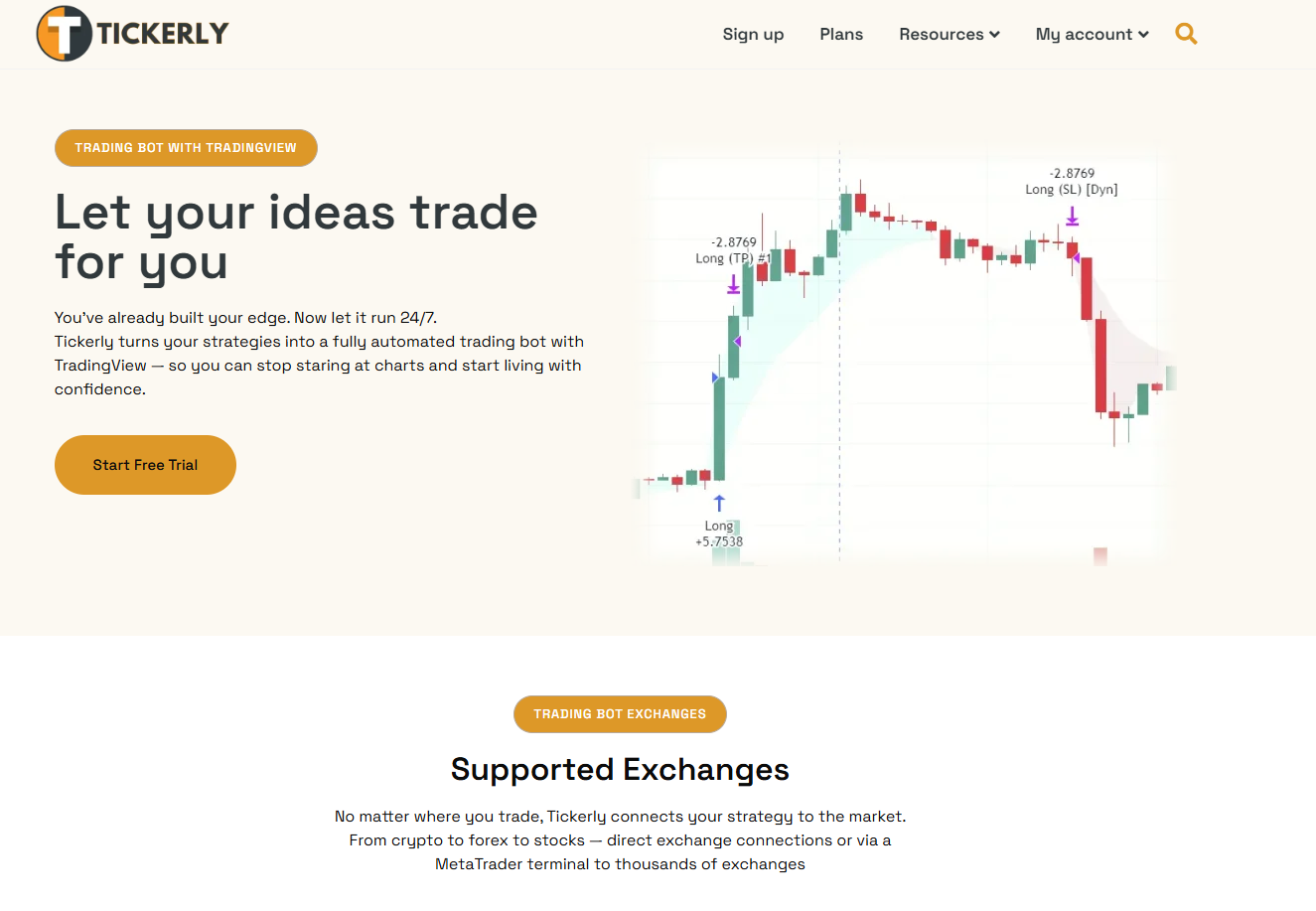
Automation handles execution speed and consistency that manual trading simply can’t match, particularly during fast-moving sessions like the London-New York overlap. You can explore top TradingView strategies built specifically for automated execution, or start with trend following strategies designed for forex automation. For a broader catalog of tested approaches, browse the full strategies library to find frameworks that match your trading style and risk tolerance.
FAQ
What is the forex market and how does it work?
Forex is the global market for buying and selling currencies. It operates 24 hours a day, five days a week across a decentralized network of banks, institutions, and retail brokers, with daily turnover exceeding $9.5 trillion as of April 2025.
What leverage limits apply to retail forex traders in 2026?
US retail traders are capped at 50:1 for major pairs under CFTC/NFA rules, while EU and UK traders face a 30:1 limit under ESMA and FCA regulations, with mandatory margin close-out and negative balance protections.
How much should I risk per forex trade?
Professional risk management guidelines recommend risking 0.5% to 2% of your total account capital per trade, which protects your account through losing streaks while allowing long-term compounding.
What are the best forex trading strategies for beginners?
Trend following and support/resistance trading are the most accessible strategies for beginners because they rely on clear market structure rather than complex indicators, making them easier to apply consistently.
Do I need a demo account before trading real money?
Yes. Testing your strategy on a demo account for 60 to 90 days establishes your win rate and expectancy before any real capital is at risk, which is a foundational step in building a sustainable trading process.