

Every automated crypto trade your bot executes is a taxable event under U.S. law. The IRS treats cryptocurrency as property under Notice 2014-21, which means each disposal — whether your grid bot executes hundreds of trades monthly or your DCA bot accumulates ETH in small lots — creates a realized gain or loss you must report. There is no de minimis threshold; even very small profits on grid trades count the same as large swing trades
Take these steps now, before you file:
-
Export your bot’s full trade history with timestamps, order IDs, pairs, quantities, prices, and fee details.
-
Tag each trade as a buy, sell, or transfer so your tax software or CPA can classify it correctly.
-
Connect your exchange API to a crypto tax tool or deliver a structured CSV to your preparer.
-
Identify your lot method (FIFO is the IRS default) and document it in writing before you file.
-
Reconcile broker-issued Form 1099-DA against your own ledger — discrepancies are your responsibility to explain.
Pro Tip: Don’t wait until April. Reconcile monthly so errors surface when exchange API history is still accessible, not after data retention windows close.
Form 8949 is where every individual disposal lands. Schedule D aggregates the totals. Starting with transactions effected on or after January 1, 2025, brokers must report gross proceeds on Form 1099-DA — and basis reporting phases in for covered transactions after January 1, 2026. Your bot may generate hundreds of those disposals per month, so the recordkeeping burden is real and starts now.
Key Takeaways
Every automated crypto trade is a taxable property disposal under IRS Notice 2014-21, and bot traders must maintain lot-level records, reconcile broker-issued Form 1099-DA against their own ledger, and file Form 8949 for every disposal — starting with 2025 transactions.
| Point | Details |
|---|---|
| All bot trades are taxable | Every disposal, including crypto-to-crypto swaps and fee-asset payments, creates a taxable event requiring reporting. |
| FIFO is the IRS default | Apply FIFO per wallet or exchange; document any specific-identification method in writing before filing. |
| 1099-DA covers gross proceeds from 2025 | Basis reporting phases in starting in 2026; supply your own basis for non-covered transactions. |
| Reconcile monthly, not annually | Exchange API history is often capped at 90–180 days; monthly exports prevent unrecoverable data gaps. |
| Complex situations require a CPA | Margin trading, staking income, DeFi positions, and trader-status questions warrant professional review. |
This article is general information, not a substitute for advice from a qualified financial advisor. Consult a qualified financial professional about your own circumstances before acting on anything here.
Table of Contents
-
What trading bots do and why automation changes your bookkeeping
-
How U.S. tax law treats cryptocurrency and what it means for bot users
-
How to calculate basis, holding period, and gains for each bot trade
-
Forms you’ll use and what broker reporting changes mean for bot traders
-
Recordkeeping checklist and tool workflow for high-volume bot trading
-
Practical Tickerly workflow: export, tag, and prepare bot data for taxes
-
Common mistakes, audit red flags, and when to hire a crypto-savvy CPA
What trading bots do and why automation changes your bookkeeping
A trading bot executes orders automatically based on pre-defined rules or signals. The four strategy types most common among crypto bot users each create distinct tax footprints:
-
Grid bots place layered buy and sell orders within a price range, generating dozens to hundreds of small realized gains and losses per day as price oscillates.
-
DCA (dollar-cost averaging) bots buy at scheduled intervals, creating a series of acquisition lots with different timestamps and basis values that must be tracked individually.
-
Arbitrage bots exploit price differences across exchanges, which means cross-exchange transfers, multiple realized disposals, and potential fee-asset disposals (paying gas in ETH, for example, is itself a taxable event).
-
Rebalancing bots periodically sell overweight assets and buy underweight ones to restore a target allocation — each rebalance leg is a separate taxable disposal.
Manual traders might execute 20 trades a year. Grid and arbitrage bots can generate hundreds to thousands of taxable events monthly, each requiring lot-level tracking and fee capture. That volume is what makes automation a bookkeeping challenge, not just a trading advantage.
Cross-exchange transfers add another layer. Moving BTC from Exchange A to Exchange B is not itself taxable, but if you fail to carry the original cost basis across the transfer, you create a basis gap that forces you to report the full proceeds as gain. Fee assets compound the problem: paying a 0.001 ETH network fee disposes of that ETH at its current fair market value, creating a small gain or loss that must be logged.
Pro Tip: Reconcile your bot’s trade log against your exchange statement at the end of every calendar month. Waiting until December means you may be working with incomplete API history — most exchanges cap historical data at 90 to 180 days.
How U.S. tax law treats cryptocurrency and what it means for bot users
The IRS position is unambiguous. Virtual currency is property for federal income tax purposes, and general property tax principles apply. That single classification drives every downstream consequence for bot traders.
Key terms you need to understand:
-
Convertible virtual currency: crypto that has an equivalent value in real currency and can be exchanged for it (BTC, ETH, and most traded tokens qualify).
-
Cost basis: what you paid for a lot of crypto, including fees paid to acquire it.
-
Realized gain or loss: the difference between proceeds and basis at the moment of disposal — not when the price moves, but when you sell, swap, or spend.
-
Ordinary income vs. capital gain: short-term gains (assets held 365 days or fewer) are taxed at ordinary income rates; long-term gains (held more than 365 days) qualify for preferential capital gains rates.
Whether your bot profits are taxed as capital gains or ordinary income depends on facts and circumstances — frequency, intent, and how you are organized as a trader — not on whether a bot executed the trades. Automation is a tool; the IRS looks at behavior. High-frequency bot activity with dependence on trading income can, in some cases, support a trader-status argument, which changes the tax treatment significantly. Consult a CPA if your situation is complex.
The broker reporting landscape is shifting fast. Under Treasury and IRS final regulations, brokers must report gross proceeds on Form 1099-DA for transactions effected starting in 2025. Basis reporting for covered transactions phases in after January 1, 2026. For bot users, this matters because many trades will still be classified as non-covered — meaning the broker reports proceeds but not basis, and you must supply the basis yourself on Form 8949. Relying on your exchange’s dashboard P&L to fill that gap is a filing error waiting to happen.
For capital gains tax rate guidance relevant to your specific situation, a resource like this investor-focused capital gains primer can help you understand holding-period distinctions before you sit down with a preparer.
Which bot actions actually create taxable events
Not every bot action is a taxable event, but most of them are. Here is the complete list relevant to automated traders:
Taxable events:
-
Selling crypto for USD or any fiat currency
-
Swapping one cryptocurrency for another (crypto-to-crypto trades)
-
Spending crypto to pay for goods or services
-
Receiving staking rewards, airdrops, or referral bonuses (treated as ordinary income at fair market value on the date received)
-
Disposing of a fee asset (paying gas in ETH or BNB)
-
Token migrations or swaps where the original token is retired
Not taxable (but still requires logging):
-
Transferring crypto between wallets or exchanges you own
-
Buying crypto with fiat (the acquisition creates a basis, not a taxable event)
-
Holding crypto while its price changes
Two quick examples show how bot trades generate gains:
-
Crypto-to-crypto swap: Your bot buys 0.5 ETH at $2,000 ($1,000 basis) and later swaps it for USDC when ETH is worth $2,400. Proceeds = $1,200. Gain = $200. That $200 is taxable regardless of whether you ever converted to dollars.
-
Grid bot series: Your bot executes 50 buy/sell cycles on BTC/USDT over a month, each netting $8 in profit. Total realized gain = $400. No single trade looks significant, but the aggregate is fully taxable — there is no IRS de minimis for crypto disposals.
For off-exchange or peer-to-peer trades where no exchange price exists, the IRS permits using a blockchain explorer that analyzes worldwide indices to establish fair market value at the exact date and time of the transaction. Document which explorer you used and the value you recorded.
How to calculate basis, holding period, and gains for each bot trade
Accurate gain calculation follows five steps for every disposal:
-
Identify the lot: Which specific acquisition does this disposal consume? Your lot-identification method determines this.
-
Determine basis: Purchase price plus all acquisition fees (exchange fees, network fees paid at purchase).
-
Compute proceeds: Sale price minus allowable transaction costs (fees paid at sale).
-
Calculate gain or loss: Proceeds minus basis.
-
Determine holding period: Date of acquisition to date of disposal. 365 days or fewer = short-term; more than 365 days = long-term.
Lot identification options:
-
FIFO (First In, First Out): The IRS default. The oldest lot you hold is treated as sold first. For bots running on a single exchange, FIFO is applied per wallet or per exchange account.
-
Specific identification: You may identify which specific lot you are disposing of, but you must do so at the time of the trade and maintain records that support the identification. For high-frequency bots, this is operationally demanding but can reduce tax liability when you have high-basis lots available.
A worked micro-example for a grid trade:
-
Buy: 0.01 BTC at $60,000 = $600 basis (including $2 fee).
-
Sell: 0.01 BTC at $61,500, net of $2 fee = $613 proceeds.
-
Gain: $613 − $602 = $11 short-term capital gain (held 3 days).
That $11 flows to Form 8949 as a short-term disposal. Multiply by 500 grid cycles and you have $5,500 in short-term gains that must be reported line by line — or summarized with a supporting statement attached to your return.
Pro Tip: Capture the fee asset, fee amount, timestamp, and transaction ID at the moment of execution. That data is what supports specific identification if you are ever questioned. Reconstructing it six months later from memory is not defensible.
Forms you’ll use and what broker reporting changes mean for bot traders
Filing crypto bot taxes involves several federal forms. Here is what each one covers:
-
Form 1040 / Schedule 1: Reports ordinary income from crypto (staking rewards, airdrops, mining). Answer “Yes” to the digital assets question on Form 1040 — it is required regardless of whether you had taxable transactions.
-
Form 8949: Lists every individual sale or disposal with date acquired, date sold, proceeds, basis, and gain or loss. Bot traders with high trade volumes may attach a summary with a supporting statement.
-
Schedule D: Aggregates Form 8949 totals into short-term and long-term capital gain/loss buckets and feeds into your overall tax liability.
-
Form 1099-DA: Issued by brokers starting with 2025 transactions. Reports gross proceeds; basis reporting phases in for covered transactions after January 1, 2026.
-
Form 1099-NEC / W-2: Applies if you received crypto as compensation for services.
The Form 1099-DA instructions detail how brokers handle gross proceeds, basis reporting options, and special rules for NFTs and qualifying stablecoins. Brokers may reduce reported proceeds by transaction costs, which means the 1099-DA figure and your own ledger figure may differ — that is expected, not an error, as long as you can reconcile the difference.
The phased timeline in practice:
-
2025 tax year: Brokers report gross proceeds on Form 1099-DA. Basis is not yet required from brokers for most transactions.
-
2026 tax year: Basis reporting phases in for covered transactions. Many bot trades will still be non-covered, requiring you to supply basis.
-
Your obligation now: Maintain your own lot-level ledger regardless of what the broker reports. Broker-reported 1099-DA data will improve transparency, but many bot trades will still require taxpayer-supplied basis for accurate Form 8949 entries.
Pro Tip: When you receive your 1099-DA, reconcile it against your bot ledger before filing. If proceeds differ, document why — fee treatment, rounding, or non-covered status are common explanations. Unexplained discrepancies are an audit flag.
Recordkeeping checklist and tool workflow for high-volume bot trading
The minimum data fields you need to export for every bot-executed trade:
| Field | Why It Matters |
|---|---|
| Timestamp (UTC) | Establishes holding period and FMV date |
| Order ID | Unique identifier for lot tracking and audit trail |
| Trade side (buy/sell) | Determines acquisition vs. disposal |
| Trading pair | Identifies which asset was acquired or disposed |
| Quantity | Lot size for basis and proceeds calculation |
| Price (per unit) | Basis or proceeds per unit at execution |
| Fee asset | Identifies whether fee creates a separate taxable disposal |
| Fee amount | Required for accurate basis and proceeds computation |
| Exchange / wallet | Supports per-wallet FIFO and cross-exchange reconciliation |
| Transaction hash (on-chain) | Verifiable audit trail; required for blockchain explorer FMV lookups |
Tax-aware bot design separates strategy logic from compliance logging. Your bot’s execution layer should write to an append-only log — never overwrite historical records — and export both a raw event file and a cleaned summary. Versioned mapping files (documenting which export format corresponds to which date range) prevent confusion when exchange APIs change their field names or output structure.
Common gotchas and how to fix them:
-
Missing historical API data: Most exchanges limit API history to 90–180 days. Pull and archive data monthly; do not rely on year-end exports.
-
Duplicate imports: If you import the same date range twice into tax software, gains double. Use order IDs as deduplication keys.
-
Fee omissions: Platform dashboards often omit fees, causing your reported basis to be too low and your taxable gain to be overstated. Always include fee fields in exports.
-
Transfer misclassification: A wallet-to-wallet transfer logged as a sale creates a phantom taxable event. Tag transfers explicitly.
Pro Tip: Keep both your raw event exports (unmodified API output) and your cleaned, reconciled ledger as separate versioned files. If your tax software or CPA questions a figure, the raw file is your ground truth.
Common mistakes, audit red flags, and when to hire a crypto-savvy CPA
Bot traders make a predictable set of errors. Knowing them in advance is the most efficient form of audit defense.
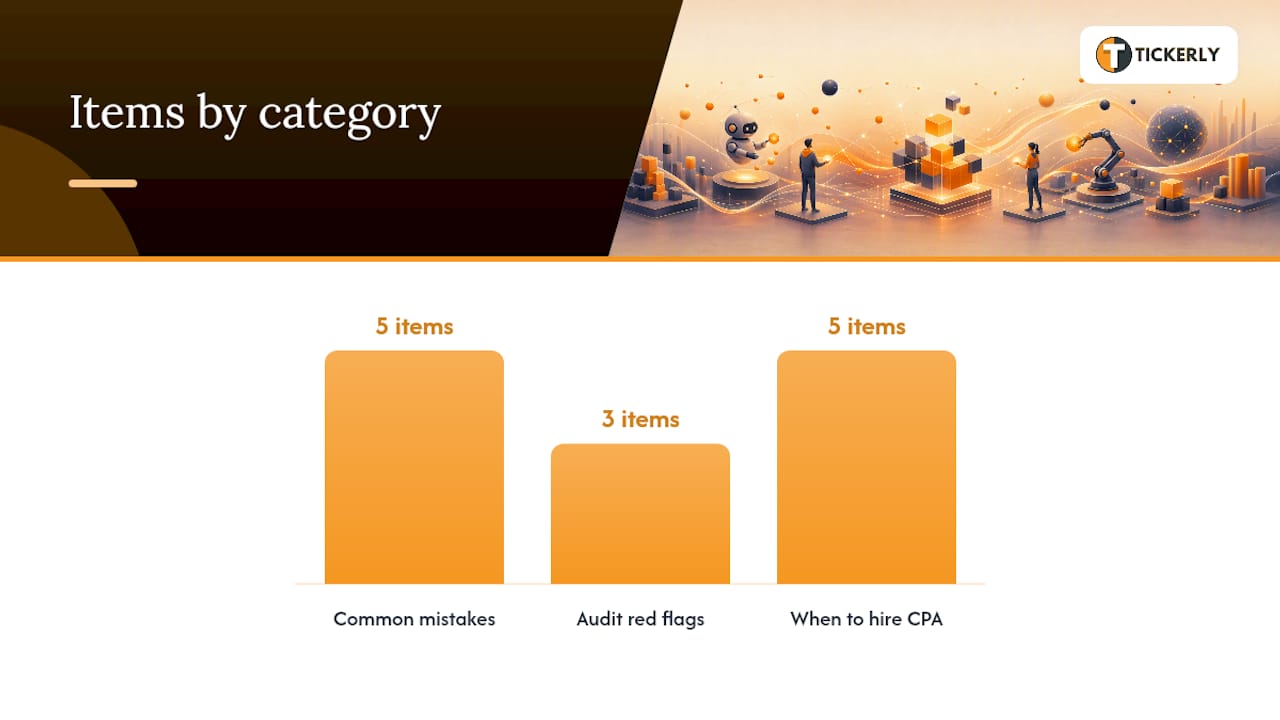
Common mistakes:
-
Missing cost basis on transfers: Moving crypto between exchanges without carrying the original basis creates a gap that forces you to report the full proceeds as gain.
-
Double imports: Importing overlapping date ranges into tax software inflates both gains and losses. Always use order IDs to deduplicate.
-
Ignored fees: Omitting acquisition or disposal fees overstates taxable gains. Every fee that is part of a trade affects basis or proceeds.
-
Misclassified staking rewards and airdrops: These are ordinary income at receipt, not capital gains. Misclassifying them understates ordinary income and overstates capital gain basis.
-
Failure to reconcile cross-exchange trades: Arbitrage bots that move assets between exchanges create transfer records that must be matched and excluded from disposal calculations.
Audit red flags specific to bot traders:
-
High trade frequency with inconsistent or incomplete logs
-
Unexplained basis gaps where proceeds far exceed any plausible basis
-
Repeated patterns that resemble wash sales without documentation of the economic rationale
On wash sales: The wash-sale rule under IRC §1091 currently applies to securities, not to cryptocurrency. As of 2026, the IRS has not extended wash-sale treatment to crypto, so a bot that sells BTC at a loss and immediately repurchases it does not trigger a wash-sale disallowance. However, monitor IRS guidance closely — legislative proposals to extend wash-sale rules to crypto have been introduced in Congress and the landscape may change.
When to hire a CPA:
-
Your bot executed more than a few hundred trades in the tax year
-
You used margin trading, crypto lending, or liquidity pool positions
-
You received staking rewards, airdrops, or DeFi income
-
Your 1099-DA proceeds differ materially from your own ledger
-
You are unsure whether your activity qualifies as trader status vs. investor status
Understanding when capital gains treatment applies vs. ordinary income treatment is exactly the kind of question a crypto-savvy CPA resolves quickly — and getting it wrong costs more than the advisory fee.
Pro Tip: If you are considering trader tax status (which allows deducting trading expenses on Schedule C), document your trading frequency, time spent, and intent before year-end. Retroactive claims are difficult to support.
What to do before next tax season: your action checklist
Every bot trader should complete these steps before filing:
-
Export and reconcile monthly. Pull your bot’s trade history at the end of each month and match it against your exchange statement. Errors caught in February are fixable; errors caught in April are a problem.
-
Capture fees and transaction hashes at execution. Fee omissions are the single most common cause of overstated taxable gains. Transaction hashes let you verify FMV from a blockchain explorer if needed.
-
Decide and document your lot-identification method. FIFO is the default; specific identification requires contemporaneous documentation. Write it down before you file, not after.
-
Reconcile your 1099-DA against your own ledger. Brokers report gross proceeds starting with 2025 transactions. Discrepancies need explanations, not assumptions.
-
Consult a CPA if your situation is complex. Margin trading, staking income, DeFi positions, and trader-status questions all benefit from professional review. The cost of a CPA is often deductible as an investment expense.
The part most bot traders get wrong
Automated trading is genuinely exciting. Watching a well-tuned grid strategy generate consistent small profits around the clock is satisfying in a way that manual trading rarely is. But the tax side of that picture deserves the same methodical attention you give your strategy parameters.
The traders who end up in trouble are not the ones who made the most trades. They are the ones who assumed their exchange’s P&L dashboard was a tax document. It is not. Platform dashboards show portfolio appreciation, not taxable realized gains — and the gap between those two numbers can be substantial when fees are missing, basis methods differ, or transfers broke the cost-basis chain.
The practical answer is not complicated: build your compliance layer before you scale your strategy. Export often, tag everything, and keep a methodology memo that a CPA can read in five minutes. The traders who do that find tax season manageable. The ones who reconstruct a year of bot activity from memory in March do not.
If you are running a high-frequency strategy through Tickerly and want to understand the full operational picture before the next filing deadline, the automated trading FAQ covers export formats and integration options in detail.

Tickerly converts your TradingView strategy alerts into fully functional trading bots with real-time execution across multiple exchanges — giving you the structured, API-consistent trade data that makes tax reporting tractable. If you are building or scaling an automated strategy and want execution speed without sacrificing the recordkeeping discipline your CPA needs, see why automated bots deliver results that manual trading cannot match.
Sources
Keep these pages accessible throughout the year, not just at filing time:
-
Frequently asked questions on virtual currency transactions | Internal Revenue Service
-
Why Crypto Trading Bots Are a Portfolio Tracking Nightmare (2026)
-
Bot Trading Taxes: What Your Platform Won’t Tell You | HandyTax
FAQ
Do crypto bots incur taxes on every trade they execute?
Yes. Every trade a bot executes that disposes of a cryptocurrency is a taxable event under IRS property rules, regardless of trade size or whether the proceeds were converted to dollars. There is no de minimis exemption for crypto disposals.
What do bot traders report on their tax return?
Each disposal goes on Form 8949 with date acquired, date sold, proceeds, basis, and gain or loss. Schedule D aggregates the totals, and ordinary income from staking or airdrops is reported on Schedule 1. Answer “Yes” to the digital assets question on Form 1040 whenever you had any crypto transaction.
Is there a legal way to reduce taxes on crypto bot profits?
You cannot avoid reporting taxable disposals, but you can manage your tax liability legally. Holding assets longer than 365 days qualifies gains for lower long-term capital gains rates. Harvesting losses before year-end offsets gains. Deductible trading expenses may apply if you qualify for trader tax status. Consult a CPA to evaluate which strategies apply to your situation.
What is the 30-day rule in crypto?
The wash-sale rule is a concept from securities law disallowing losses when repurchasing the same or substantially identical security within a short timeframe. As of 2026, the IRS has not extended wash-sale rules to cryptocurrency, so crypto losses are generally not disallowed by such repurchases. Monitor IRS and Congressional guidance, as this may change.
Will a $1,000 crypto profit from bot trading be taxed?
Yes. Any realized gain from a crypto disposal is taxable income regardless of amount. A $1,000 short-term gain is taxed at your ordinary income rate; a $1,000 long-term gain (asset held more than 365 days) is taxed at the applicable preferential capital gains rate. Neither threshold nor exemption applies to crypto gains under current IRS rules.