

Picking the right trading platform is one of the most consequential decisions you’ll make as a trader. Most platforms look similar on the surface, offering charts, order entry, and basic analytics. But the gap between a standard platform and a truly advanced one is enormous, and that gap shows up directly in your results. This article breaks down the real, research-backed advantages of advanced trading platforms, from automation and backtesting to low-latency execution and adaptive algorithms. Whether you’re running TradingView Pine Script strategies or building a fully automated system, understanding these benefits will sharpen how you evaluate and choose the tools you trade with.
Table of Contents
-
Why advanced platforms matter: Core features that drive results
-
Performance advantages: Automation, backtesting, and data-driven edges
-
Adaptive strategies and technology: Staying ahead of market change
-
Upgrade your trading with Tickerly’s advanced platform suite
Key Takeaways
| Point | Details |
|---|---|
| Performance boost | Advanced platforms deliver higher profitability through automation and robust testing features. |
| Speed advantage | Low-latency execution and order variety help secure better trade prices and outcomes. |
| Adaptability | Adaptive systems stay competitive by automatically adjusting to market volatility. |
| Real-world edge | Integrating analytics, automation, and execution provides a practical advantage for modern traders. |
Why advanced platforms matter: Core features that drive results
Not all trading platforms are built the same. The features a platform offers determine not just what you can do, but how efficiently and profitably you do it. Advanced platforms separate themselves from basic tools through a specific set of capabilities that directly affect trading outcomes.
Here are the core features that define a genuinely advanced trading platform:
-
Automation integration: The ability to connect your strategy logic directly to live order execution via API, eliminating manual intervention and the errors that come with it.
-
Risk management tools: Built-in controls like position sizing, stop-loss automation, and drawdown limits that protect your capital even when markets move fast.
-
Strategy backtesting: The ability to run your strategy against historical data before risking real capital, so you know what to expect under different market conditions.
-
Order variety: Support for limit orders, market orders, conditional orders, and bracket orders that give you precise control over entries and exits.
-
Multi-asset and multi-exchange support: Access to a wide range of platform options for trading across crypto, forex, and equities from a single interface.
These features are not luxury add-ons. They are the foundation of consistent, scalable trading. The online trading platform market is growing from $8.9 billion in 2021 to a projected $18.4 billion by 2031, at a CAGR of 7.8%. That growth is driven by traders demanding more flexible, robust tools that go beyond simple order entry.
The performance difference between a trader using a basic platform and one using an advanced platform is not marginal. Automation alone removes emotional decision-making, which is one of the most consistent sources of trading losses. Risk management tools enforce discipline at the system level, not just at the intention level.
Pro Tip: When evaluating platforms, prioritize seamless automation integration first. A platform that can execute your strategy 24/7 without manual input is worth far more than one with a better-looking interface.
The bottom line is that advanced features are not about complexity for its own sake. They exist because the markets reward precision, speed, and discipline, and these tools deliver exactly that.
Performance advantages: Automation, backtesting, and data-driven edges
With the essential features outlined, see how specific technical capabilities translate to measurable performance advantages.
Automation means your strategy runs exactly as coded, every time, without hesitation or second-guessing. Backtesting means you’ve already stress-tested that strategy against years of historical data before a single dollar is at risk. Together, they form the backbone of data-driven trading.
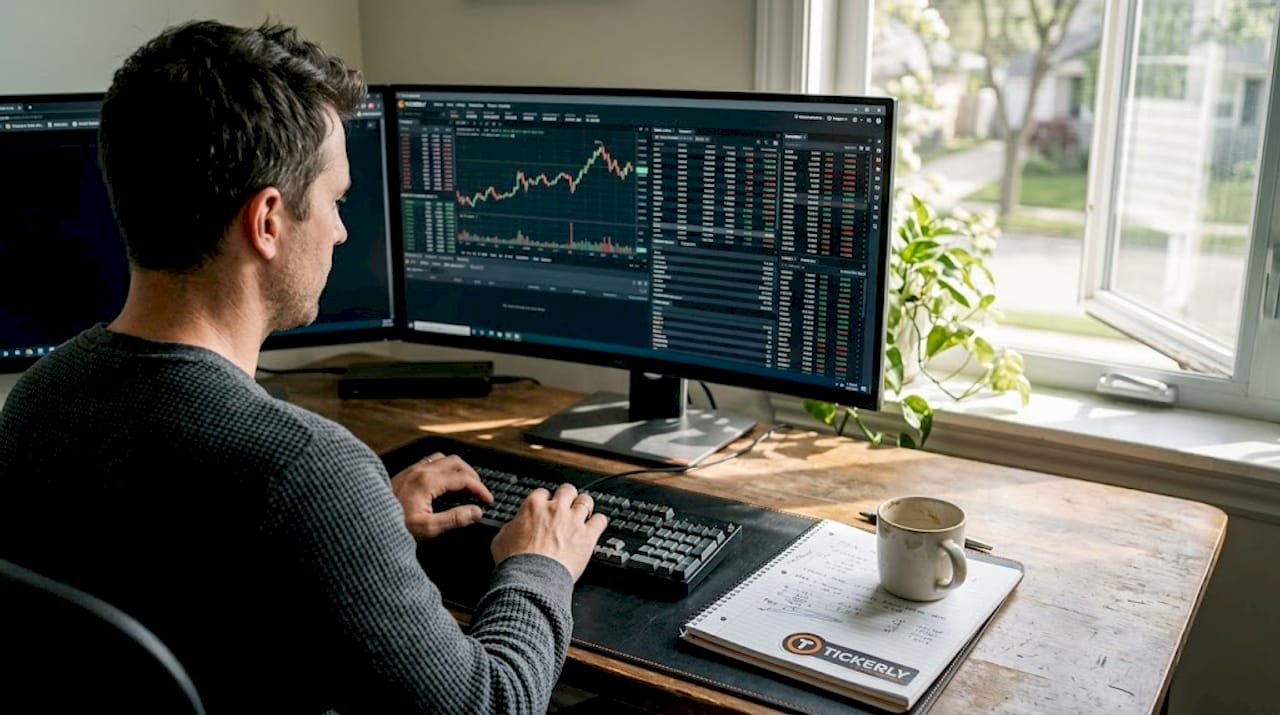
The numbers back this up clearly. Crypto systematic strategies show a 72.9% rate of profitable backtests with a median profit factor of 1.18, compared to just 50% for forex strategies at a median profit factor of 1.12. The best-performing EMA Swing strategy on BTCUSD reached a profit factor of 2.14. These aren’t theoretical gains. They reflect what happens when traders use structured, data-backed approaches instead of intuition.
Furthermore, AATS (Adaptive Algorithmic Trading Systems) consistently deliver superior risk-adjusted returns compared to simple buy-and-hold approaches, particularly in volatile market conditions.
Here’s a direct comparison of trading approaches:
| Approach | Profitability rate | Emotion risk | Scalability |
|---|---|---|---|
| Manual trading | ~40-50% | High | Low |
| Basic automated | ~55-65% | Low | Medium |
| Backtested algorithmic | ~65-73% | Very low | High |
The practical benefits of using automation and backtesting together include:
-
Consistent strategy execution without emotional interference
-
Faster identification of underperforming strategies before real losses occur
-
Ability to run multiple strategies simultaneously across different assets
-
Clearer performance attribution so you know exactly what’s working
-
Reduced time monitoring markets, freeing you to focus on strategy development
If you’re serious about improving results, the crypto trading automation guide is a strong starting point. You can also explore strategy benchmarking tools to measure your own system’s performance against real benchmarks.
Speed, order execution, and the low-latency edge
Beyond core features and performance, speed and order execution offer powerful, often underappreciated advantages.
Latency, in trading, refers to the delay between when a signal is generated and when an order is actually filled. In fast-moving markets, even a few milliseconds of delay can mean the difference between a good fill and a bad one. Sub-millisecond systems using advanced FPGA hardware execute orders up to 1,000 times faster than standard CPU-based systems, a gap that matters enormously in high-frequency and arbitrage strategies.
For most retail traders, you don’t need FPGA-level speed. But you do need a platform that doesn’t introduce unnecessary latency through slow API responses or inefficient order routing. Here’s how speed of execution improves your trading outcomes:
-
Better fill prices: Faster execution means your orders are filled closer to the price you intended, reducing slippage.
-
More reliable stop-losses: In volatile markets, a slow platform may fill your stop at a significantly worse price than set.
-
Scalability of strategies: Faster systems can handle more simultaneous positions without degrading performance.
-
Arbitrage viability: Price discrepancies across exchanges close in milliseconds. Speed is non-negotiable for this approach.
Order type also matters significantly. Limit orders account for 25.5% of retail trading activity and are a proven tool for lowering trading costs by ensuring you never pay more than your target price.
| Setup type | Latency level | Best use case | Cost efficiency |
|---|---|---|---|
| Manual trading | Seconds to minutes | Long-term positions | Low |
| Regular automated | Milliseconds | Swing and day trading | Medium |
| Low-latency/HFT | Sub-millisecond | Scalping, arbitrage | High |
Exploring autotrading speed advantages can help you understand how platform architecture directly affects your execution quality and overall strategy performance.
Adaptive strategies and technology: Staying ahead of market change
Even with strong execution, the most successful traders benefit from platforms that evolve and adapt over time.
Markets change. Volatility regimes shift. Correlations break down. A strategy that worked perfectly in 2024 may underperform significantly in 2026 if conditions have changed. This is where adaptive platform technology becomes a genuine competitive advantage.
Adaptive algorithms use recursive optimization, meaning they continuously re-evaluate their own parameters based on recent market data and adjust accordingly. Adaptive systems using recursive optimization consistently outperform static strategies in volatile and emerging market conditions. This isn’t just about crypto. It applies across any asset class where conditions shift faster than a trader can manually re-optimize.
The technology advances now standard in top-tier platforms include:
-
Dynamic parameter adjustment: Strategies that automatically recalibrate based on rolling performance windows.
-
Volatility-aware position sizing: Systems that reduce exposure when market conditions become less predictable.
-
Multi-timeframe analysis integration: Platforms that incorporate signals from multiple timeframes to improve entry and exit timing.
-
Automated alert and webhook systems: Instant signal delivery from TradingView to your broker without manual steps.
-
Real-time performance dashboards: Live monitoring of strategy health across all active positions.
Pro Tip: When evaluating platforms, look specifically for support of recursive optimization or rolling parameter updates. Static strategies erode over time. Platforms that support ongoing adaptation keep your edge alive longer.
If you want to stay competitive, optimizing strategies for market shifts is not optional. It’s the difference between a strategy that works for six months and one that works for years. Reviewing flexible platform options that support these adaptive features is a smart next step.
A strategist’s view: The hidden advantages most overlook
After years of working with traders who run dozens of concurrent strategies, one pattern stands out clearly. Most traders obsess over backtesting statistics and execution speed. Both matter. But the advantages that actually separate consistently profitable traders from the rest are quieter and less discussed.
Workflow automation is one of them. The ability to automatically log trades, send alerts, resize positions based on account equity, and route signals from TradingView to your exchange without manual steps saves hours every week and eliminates entire categories of error. That’s not a headline feature. But it’s the kind of operational efficiency that compounds over months.
Adaptive technology is the other. Chasing microseconds is a game for institutional players with dedicated infrastructure. For most traders, the real edge comes from being able to test a new idea, validate it against recent data, and deploy it in hours rather than days. Platforms that make that cycle fast and reliable are worth far more than platforms that simply execute faster.
Revisiting practical strategy examples with this lens changes how you evaluate what a platform is actually worth. Look beyond the headline numbers.
Upgrade your trading with Tickerly’s advanced platform suite
The advantages covered in this article, from automation and backtesting to adaptive algorithms and low-latency execution, are exactly what Tickerly is built to deliver. Tickerly turns your TradingView strategies into fully automated trading bots, connecting Pine Script signals directly to live exchange execution with minimal friction.
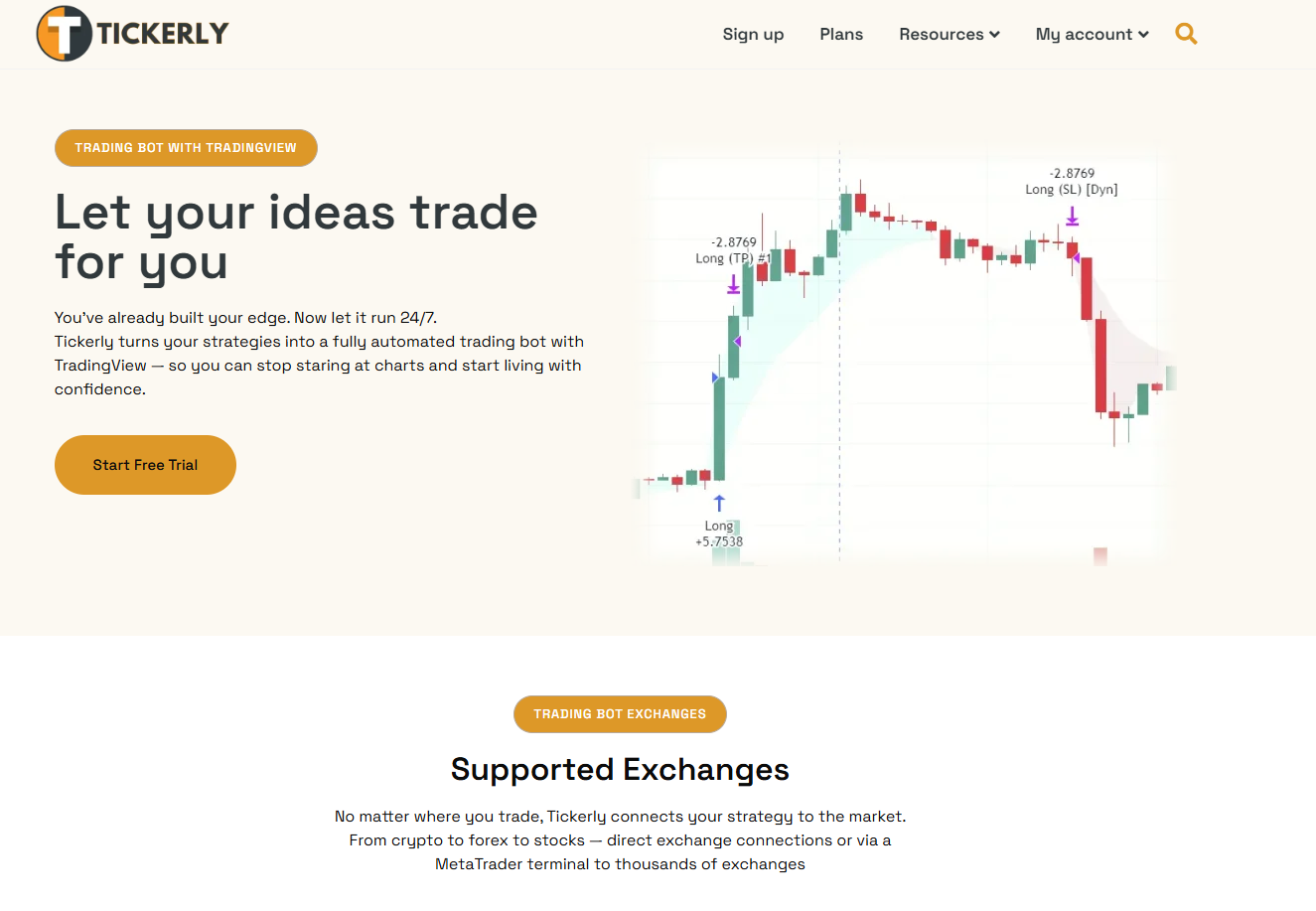
Whether you’re running crypto strategies, forex systems, or multi-asset portfolios, Tickerly’s TradingView algo platform gives you the infrastructure to execute at scale. From autotrading solutions that handle order routing automatically to a complete platform suite covering alerts, position sizing, and performance tracking, Tickerly puts the full stack of advanced platform benefits within reach. Start automating your edge today.
Frequently asked questions
What are the most important features to look for in a trading platform?
Key features include automation integration, robust backtesting tools, adaptive strategies, and low-latency order execution for best trading outcomes. Platforms that support recursive optimization are especially valuable in volatile market conditions.
How does backtesting improve trading performance?
Backtesting lets you test strategies on past data to boost confidence, reduce risk, and identify the most profitable approaches before committing real capital. Crypto systematic strategies show a 72.9% profitable backtest rate, significantly higher than unstructured approaches.
Why is low-latency execution important for traders?
Faster order execution means trades are filled at optimal prices, which is crucial for high-frequency and fast-moving markets. Sub-millisecond systems using FPGA hardware execute up to 1,000 times faster than standard CPUs.
Do adaptive platforms really help in volatile markets?
Yes, platforms with adaptive algorithms can optimize strategy parameters automatically, improving results in shifting conditions. Adaptive systems using recursive optimization consistently outperform static strategies when market volatility increases.